

What Most People Miss About Strength Training
Strength training has become a familiar phrase in modern fitness conversations. It appears on workout plans, social media reels, and gym schedules everywhere. Yet, despite its popularity, much of what truly defines strength training remains quietly overlooked.
At its best, strength training is not about lifting heavier weights every week or chasing a particular physique. It is about understanding how the body adapts, how movement shapes resilience, and how consistency - done intelligently - creates strength that lasts far beyond the gym floor.
At Lotus Fitness Centre in JP Nagar, strength training is approached not as a trend, but as a long - term practice rooted in awareness, balance, and thoughtful progression.
Strength Is More Than Muscle
One of the most common misunderstandings about strength training is that it exists solely to build muscle. While muscle development is certainly a part of the process, true strength extends far beyond what is visible.
Strength is stability in movement.
It is joint integrity.
It is posture, coordination, and the ability to move confidently through daily life.
When strength training is approached holistically, it supports how the body functions as a system. This is why, in a well - designed gym or fitness centre environment, strength training benefits people across age groups, experience levels, and goals.
The Role of the Nervous System
What many people miss is that strength training is as much neurological as it is physical.
In the early stages of training, improvements often come not from larger muscles, but from better communication between the brain and the body. Movements become more efficient. Balance improves. Control increases.
This is why proper instruction, pacing, and attention to form matter so deeply. At Lotus Fitness Centre, strength training programs are structured to allow the nervous system to adapt alongside the muscles - creating strength that feels controlled rather than forced.
Why More Is Not Always Better
Another misconception is that progress depends on doing more - more weight, more reps, more intensity.
In reality, effective strength training is built on timing and recovery. Muscles grow and strengthen during rest, not during exertion. Without adequate recovery, progress slows, motivation dips, and the risk of injury increases.
A thoughtful gym or fitness centre environment recognises this balance. Strength training sessions are designed to challenge the body without overwhelming it, allowing members to train consistently over time rather than in short bursts followed by burnout.
Strength Training and Everyday Life
The true value of strength training often shows up outside the gym.
It appears when carrying groceries feels easier.
When climbing stairs no longer feels tiring.
When posture improves and everyday aches reduce.
At Lotus Fitness Centre in JP Nagar, strength training is framed as a way to enhance daily life, not escape it. The goal is not to create dependency on the gym, but to build strength that supports life beyond it.
Form Before Load
One of the most overlooked aspects of strength training is movement quality.
Lifting heavier weights without proper form may look impressive, but it often limits long - term progress. Clean, controlled movement patterns protect joints, improve muscle activation, and build a foundation for sustainable strength.
This is why experienced guidance matters. A gym or fitness centre that prioritises form creates an environment where members feel supported rather than rushed, allowing strength to develop gradually and safely.
Strength Training Is Not One - Size - Fits - All
No two bodies respond to training in exactly the same way.
Factors such as age, lifestyle, previous injuries, stress levels, and sleep all influence how strength develops. Yet many people follow generic routines without considering their individual needs.
At Lotus Fitness Centre, strength training is approached with adaptability in mind. Programs evolve as the body adapts, ensuring that training remains effective and engaging rather than repetitive or discouraging.
The Mental Side of Strength
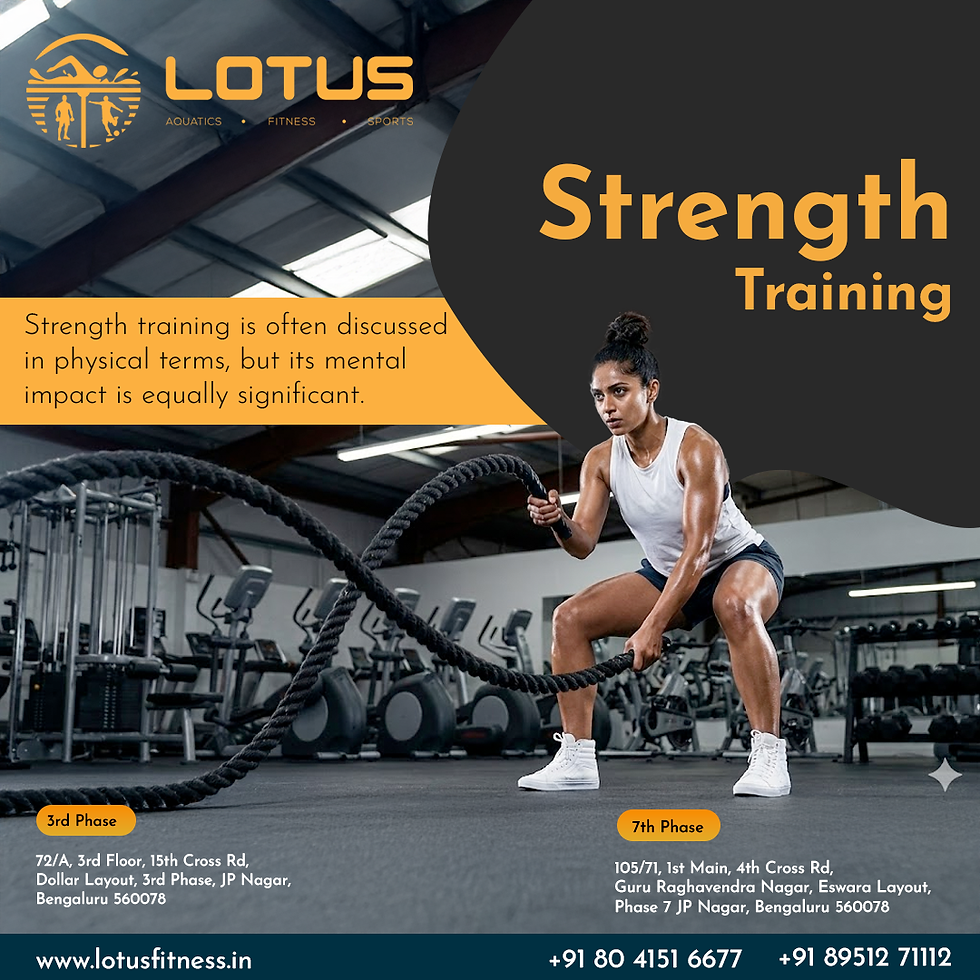
Strength training is often discussed in physical terms, but its mental impact is equally significant.
There is confidence that comes from feeling physically capable.
There is clarity that follows focused movement.
There is resilience built through showing up consistently.
In a calm, well - structured fitness centre, strength training becomes a space for mental grounding as much as physical development. This balance is especially important in today's fast - paced routines, where fitness often becomes another source of pressure rather than support.
Why Strength Training Supports Longevity
Strength is not just about the present - it is about the future.
As the body ages, maintaining muscle mass, bone density, and joint stability becomes essential for long - term health. Strength training supports mobility, reduces injury risk, and helps maintain independence over time.
This is why strength training is relevant whether someone is new to fitness or returning after years away. A gym or fitness centre that understands longevity designs programs that respect the body's changing needs rather than pushing extremes.
Consistency Over Intensity
One of the most valuable lessons strength training offers is patience.
Progress is rarely dramatic or immediate. It unfolds quietly through repeated effort and steady commitment. This is why consistency matters far more than intensity.
At Lotus Fitness Centre in JP Nagar, strength training is framed as a practice rather than a challenge. Members are encouraged to build routines they can sustain, not routines that exhaust them.
The Environment Matters More Than You Think
The atmosphere of a gym or fitness centre plays a subtle but powerful role in how people train.
A space that feels overwhelming can discourage focus.
A space that feels rushed can encourage poor form.
A space that feels supportive invites consistency.
Lotus Fitness Centre is designed to feel intentional - allowing members the physical and mental space to train with attention and care. This environment supports strength training that feels purposeful rather than performative.
Strength Training as a Relationship With the Body
Perhaps the most overlooked aspect of strength training is that it builds a relationship with the body.
Over time, people learn to recognise effort versus strain, progress versus fatigue. They develop awareness of how their body responds to movement, rest, and nutrition.
This awareness transforms fitness from something external into something personal. Strength training becomes less about appearance and more about understanding.
Why Curiosity Matters in Training
When strength training is driven by curiosity rather than comparison, it becomes sustainable.
Curiosity encourages learning.
It encourages listening to the body.
It encourages progress without pressure.
At Lotus Fitness Centre, strength training is approached as an evolving process - one where members are guided, supported, and encouraged to understand their own journey rather than follow a fixed template.
Strength That Stays With You
What most people miss about strength training is that its greatest benefits are not always visible.
They are felt in how the body moves, how the mind responds, and how daily life becomes easier and more balanced.
At Lotus Fitness Centre in JP Nagar, strength training is not about chasing extremes. It is about building strength that lasts - through intelligent programming, thoughtful guidance, and an environment that respects the individual.
Because real strength is not just built in the gym or fitness centre. It stays with you everywhere else.


Comments